HVAC Tune-Ups in Marietta, GA
A cooling check in spring and a heating check in fall, so the weak part is found on a mild day instead of the hottest or coldest night.
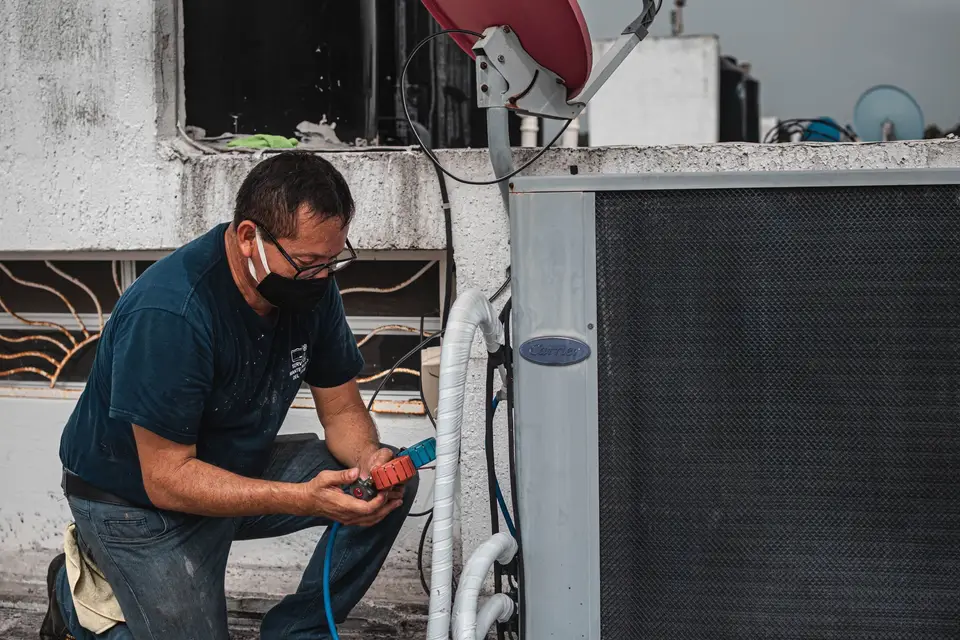
HVAC tune-ups in Marietta are the least expensive repair you will ever pay for, because they happen before anything breaks. A Cobb County home asks its system to cool through a long, humid summer and to heat through a winter with real freezes, so the parts that wear out get worked hard twice a year. A check before each season finds most of them while they are still small, and while the schedule is calm enough to book any day you like.
The spring cooling check
The spring visit gets the air conditioner or heat pump ready for summer. The tech:
- Rinses the outdoor coil from the inside out, which matters more here than in most places because the spring pollen in Cobb County coats coils yellow every year.
- Checks the indoor coil and cleans it if it is dirty enough to slow the air.
- Flushes the condensate drain line and checks the pan and the float switch, with extra care on attic units.
- Tests the capacitor and the contactor, the two parts behind most summer breakdowns.
- Reads the refrigerant pressures and the temperature drop across the coil.
- Checks the electrical connections, the fan motors, the blower and the thermostat.
- Looks at the line set insulation and the condition of the outdoor unit’s pad.
The fall heating check
The fall visit gets the furnace or heat pump ready for winter. On a gas furnace, the tech:
- Cleans the flame sensor and the burners and checks the igniter for cracks.
- Tests the inducer, the pressure switch and the limit switches.
- Checks the flue and the venting for blockages, gaps and correct draft.
- Measures carbon monoxide at the furnace and in the supply air.
- Inspects the heat exchanger where it can be seen.
- Tests the blower, the capacitor and the electrical connections.
On a heat pump, the fall visit tests the defrost control, the outdoor sensor, the reversing valve and the backup heat strips, and checks the refrigerant charge in heating mode.
What you get after each visit
A short note of what was checked, what was cleaned and anything the tech saw that is worth watching. If something needs a repair, it is written down with its price, and nothing is done without your yes. Many visits end with nothing to fix at all. The note says so, and you have a record of the system’s condition for the day you sell the house or weigh up a replacement.
How the maintenance plan works
A tune-up can be booked on its own any time. The plan simply books both visits for you each year:
- We call you. In early spring and early fall, the office calls or texts to set a time, so the visits never slip off your list.
- Priority when something breaks. On a busy day, plan members get the next open slot ahead of new calls.
- One plan for every system. Two-story homes with two systems, or a home with a ductless unit in the basement, can cover each one on the same plan.
The price of the plan and what it includes are written on the sign-up sheet, along with how to cancel, and you get it before you join.
Why twice a year here
In some parts of the country a system works hard for one season and coasts through the other. Around Marietta it does both. The air conditioner may run from May to late September, and the furnace or heat pump picks up in November and carries the house through stretches of freezing nights in January and February. Every one of those months adds hours to the same blower motor, the same capacitors and the same electrical connections. Splitting the check into spring and fall means each half of the system is tested right before the season that will lean on it, instead of once a year at a time that suits one half and not the other.
Your share of the upkeep
The single biggest thing you can do is keep the filter clean. A clogged filter starves the system of air, which can freeze the coil in summer and trip the limit switch on a furnace in winter. Check it every month and change it when it looks gray. In pollen season and in homes with pets, that may be every few weeks.
Keep the outdoor unit clear. Leave a couple of feet of open space around it, trim back shrubs and pull out leaves and grass clippings. Do not cover it in winter unless the maker says to, because a heat pump needs to run then.
Keep vents and returns open. Closing vents in unused rooms rarely saves money and can raise the pressure in the ducts enough to cause leaks.
When a tune-up turns into a decision
Sometimes a spring or fall check finds a system that is near the end of its life: a heat exchanger with visible wear, a compressor drawing far more than it should or a coil leaking refrigerant. When that happens, the tech tells you what was found, writes down the repair price and offers a replacement price beside it. There is no pressure to decide that day. Many owners keep the numbers on file and plan for it over the next season. The system replacement page explains how those quotes are built, and the AC repair page covers what happens when something does break between visits.
Where we work
- Tune-ups and maintenance plans in Marietta, GAFrom the older brick homes near the Square to the newer neighborhoods out toward East Cobb, we repair, tune up and replace heating and cooling systems across Marietta.
- Tune-ups and maintenance plans in Kennesaw, GATwo-story homes from the 1990s and 2000s with the furnace in the attic and a second system upstairs, many of them now reaching the age where parts start to fail.
- Tune-ups and maintenance plans in Smyrna, GATownhomes, renovated ranches and new infill houses close to the city, where tight closets and crawlspace ducts shape every repair.
Guides
- Getting Your Heat Ready for a Georgia Cold SnapGetting your heat ready for a Georgia cold snap. What to check on a furnace or heat pump in the fall, what to do when the freeze arrives and when to call.
- Six Things to Check Before You Call for HVAC ServiceSix things to check before you call for HVAC service. Thermostat, filter, breakers, the furnace switch, the drain pan and the outdoor unit, explained step by step.
Questions about tune-ups and maintenance plans
When is the best time for a tune-up?
March to May for cooling and September to November for heating. Those months are calm, so a visit is easy to book, and a weak part found then can be fixed before the first heat wave or the first freeze. A tune-up in July or January still helps, but the calendar is tighter.
Does a tune-up really make a difference?
It finds the parts that are about to fail, such as a weak capacitor, a dirty flame sensor or a drain line that is half clogged, while they cost little to replace. It also keeps the coils clean, which helps the system run shorter cycles on the same settings. Most of the summer emergencies we see trace back to something a spring check would have caught.
What do I need to do between visits?
Check the filter every month and change it when it looks gray, keep plants and leaves a couple of feet back from the outdoor unit, and make sure nothing blocks the supply vents or the return grilles. If the system starts to sound or smell different, call before it gets worse.
Can I cancel the plan?
The plan terms, including how to cancel, are written on the sign-up sheet you get before you join. Ask us to walk through them on the first visit if anything is unclear.