Six Things to Check Before You Call for HVAC Service
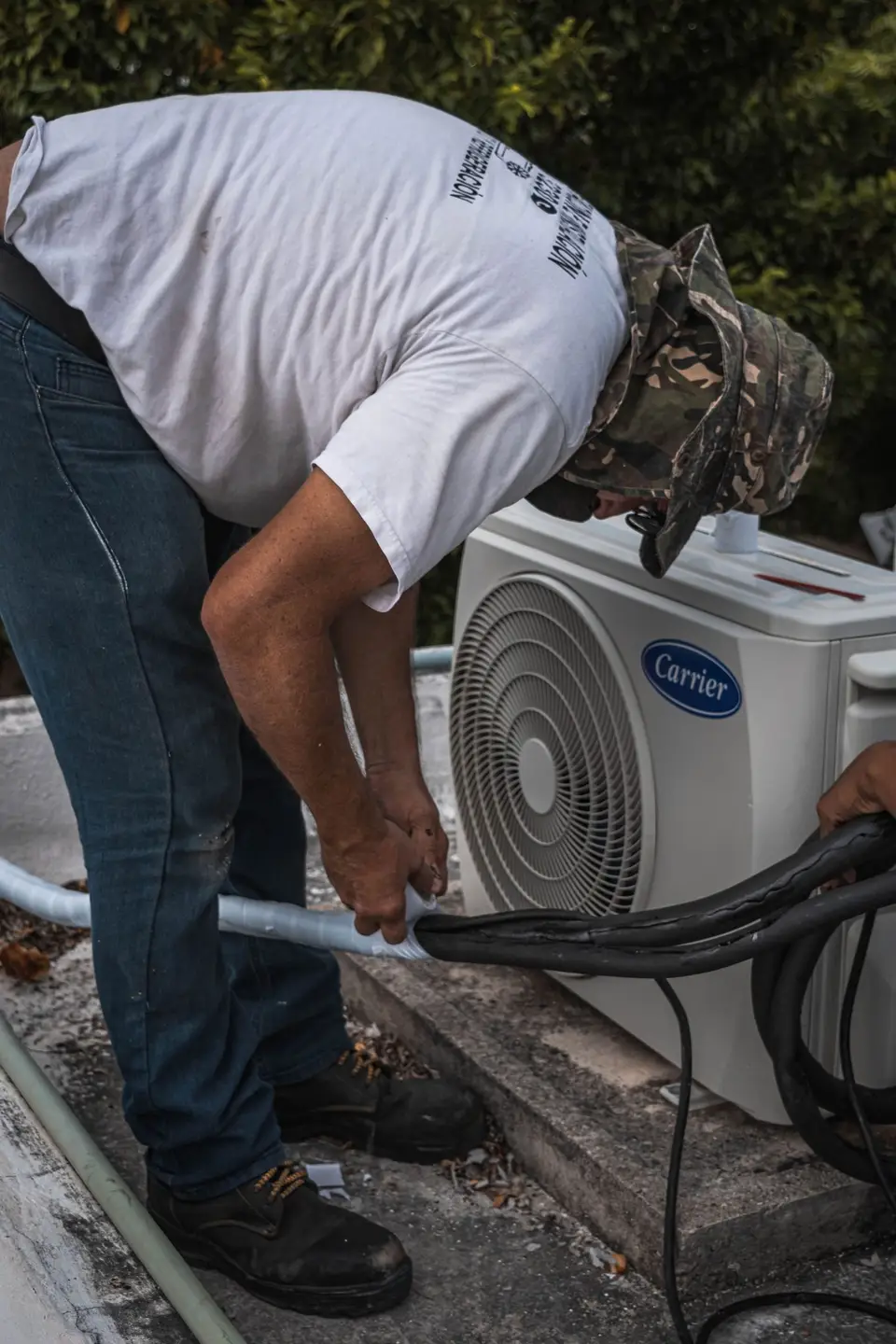
Six things to check before you call for HVAC service can save you a visit fee, and even when they do not, they help the tech find the problem faster. A surprising number of calls in Cobb County end with a tech flipping a switch, swapping a filter or replacing thermostat batteries. That is a fine outcome, but it is one you can reach yourself in ten minutes, any time of day.
None of these checks involve opening the equipment, touching wiring or working near a gas flame. If a step asks for more than you are comfortable doing, skip it and call.
1. The thermostat
Start where the system takes its orders.
- Check the mode. Make sure it is set to heat or cool, not off or fan only. On some thermostats, a household member or a power blip can change it without anyone noticing.
- Check the setting. For cooling, set it a few degrees below the room temperature. For heating, a few degrees above. If the setting is too close to the room temperature, the system may not start.
- Replace the batteries. Many thermostats run on AA or AAA batteries, and a weak battery can make the screen look fine while the thermostat stops calling for heat or cooling.
- Check the schedule. A programmable or smart thermostat may be following a schedule you forgot about. Hold the temperature manually to test.
If the screen is blank and fresh batteries do not help, the thermostat may not be getting power, which points to the next checks.
2. The filter
A clogged filter causes more trouble than any other single thing in a home system. In summer, it starves the indoor coil of air until the coil freezes and the house stops cooling. In winter, it makes a furnace overheat until the limit switch shuts the burners off.
Find the filter, usually at the return grille or in a slot beside the furnace or air handler. If it looks gray or you cannot see light through it, replace it. If the coil has frozen, set the thermostat to off with the fan on and let it thaw for a few hours before turning the cooling back on.
3. The breakers
Heating and cooling equipment usually has its own breakers in the main electrical panel, often labeled for the furnace, the air handler, the AC or the heat pump. A summer thunderstorm or a power surge can trip one.
If a breaker is tripped, reset it once by pushing it fully off and then back on. If it trips again, leave it off and call. A breaker that keeps tripping is protecting you from something, often a weak capacitor, a shorted wire or a compressor drawing too much power.
4. The furnace switch and the outdoor disconnect
Most furnaces and air handlers have a service switch that looks like an ordinary light switch, mounted on the unit or on the wall nearby. It is easy to turn off by mistake, especially in a basement or closet where people store things. Make sure it is on.
Outside, the air conditioner or heat pump has a disconnect box on the wall near the unit. Check that its handle or pull-out block is in the on position. After yard work or a visit from another trade, it is sometimes left off.
5. The drain pan and the float switch
Air conditioners and heat pumps pull water out of the air, and that water drains through a pipe to the outside or to a pump. When the drain clogs, the water fills the pan under the indoor unit. Many systems have a float switch that shuts the cooling off when the pan fills, which protects your ceiling but leaves the house warm.
This is the most common summer call in two-story homes in Kennesaw, where the upstairs unit sits in the attic. Look at the indoor unit. If the pan is full of water, or you see a small switch in the pan or on the drain line that has tripped, the drain is probably clogged. Turn the system off and call. In an attic unit, check the ceiling below for stains too. Clearing a clogged line properly needs the right tools, and a quick fix that leaves algae in the line will clog again.
6. The outdoor unit
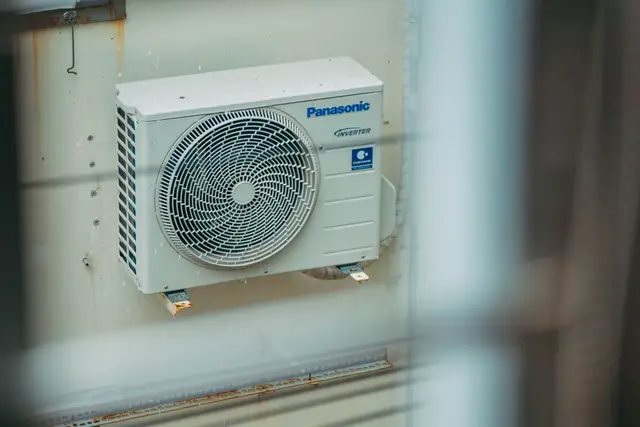
Walk outside and look at the air conditioner or heat pump while it should be running.
- Is the fan spinning? If the unit hums but the fan is still, turn the system off at the thermostat. Running it this way can overheat the compressor. This is often a failed capacitor and needs a visit.
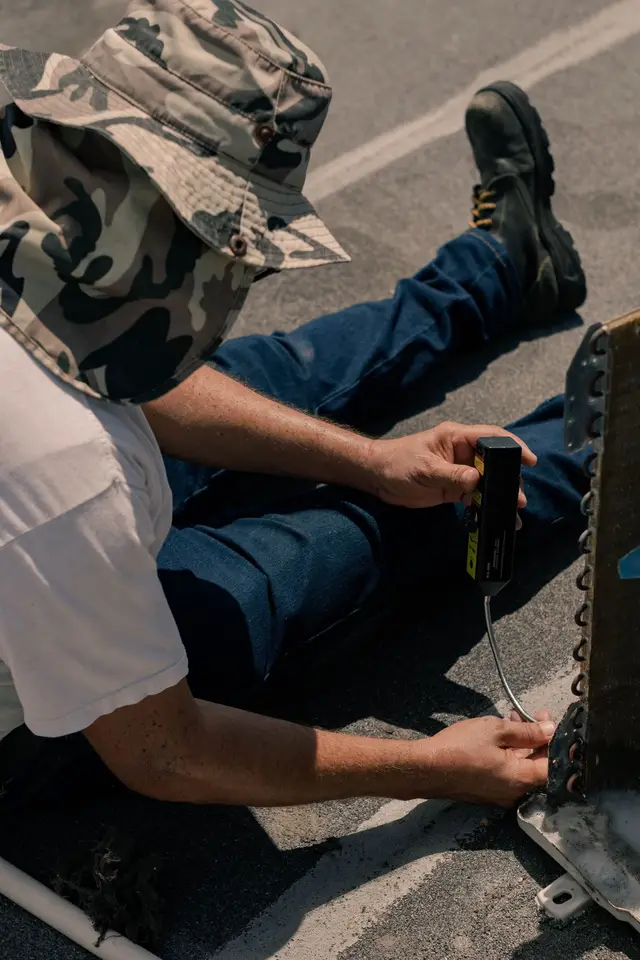
- Is the coil clear? Leaves, grass clippings, pine straw and spring pollen can block the coil. Clear debris from around the unit by hand and leave a couple of feet of open space. Do not bend the fins.
- Is it iced over? In summer, ice on the unit or the lines means a frozen coil. Turn the cooling off and check the filter. In winter, a heat pump that frosts and then clears every so often is defrosting normally. One that stays caked in ice needs a look.
When to skip the checks and call
Some signs mean you should stop and call right away. If you smell gas, leave the house and call the gas company or 911 from outside. If a carbon monoxide alarm sounds, get everyone outside first. If you smell burning wiring or see scorch marks, turn the system off at the breaker. If water is coming through a ceiling, turn the system off and catch the drip.
Telling the tech what you found
When you do book a visit, mention what you checked and what you saw: the breaker tripped twice, the filter was clean, the outdoor fan hums but does not spin. It helps the tech arrive with the right parts and start in the right place. If the furnace board has a blinking light, count the blinks or take a photo, since that code narrows the search.
For the details of a visit, see the AC repair and heating repair pages. To have most of these checks done for you twice a year, see tune-ups and maintenance plans.
Questions about this guide
Is it safe to check these things myself?
Yes, the checks here are safe for any homeowner. They involve the thermostat, the filter, switches and breakers and looking at the equipment. Never open the furnace burner area, the electrical panel inside the outdoor unit or any refrigerant line. Leave those to a tech.
What if one of these checks fixes it but the problem comes back?
Then something is causing it. A breaker that trips again, a filter that clogs in two weeks or a drain pan that keeps filling are signs of a fault that needs a visit. Mention what you found and what you did when you book.
Should I call even if everything seems fine after a reset?
If a reset fixed it and it stays fixed through a full day of use, you can usually wait for your next seasonal check. Mention it then, so the tech knows to look closely at that part.