AC Repair in Marietta, GA
Air conditioner repair in Marietta for warm air, a frozen line, a breaker that keeps tripping or a unit that hums and won't start, priced in writing first.
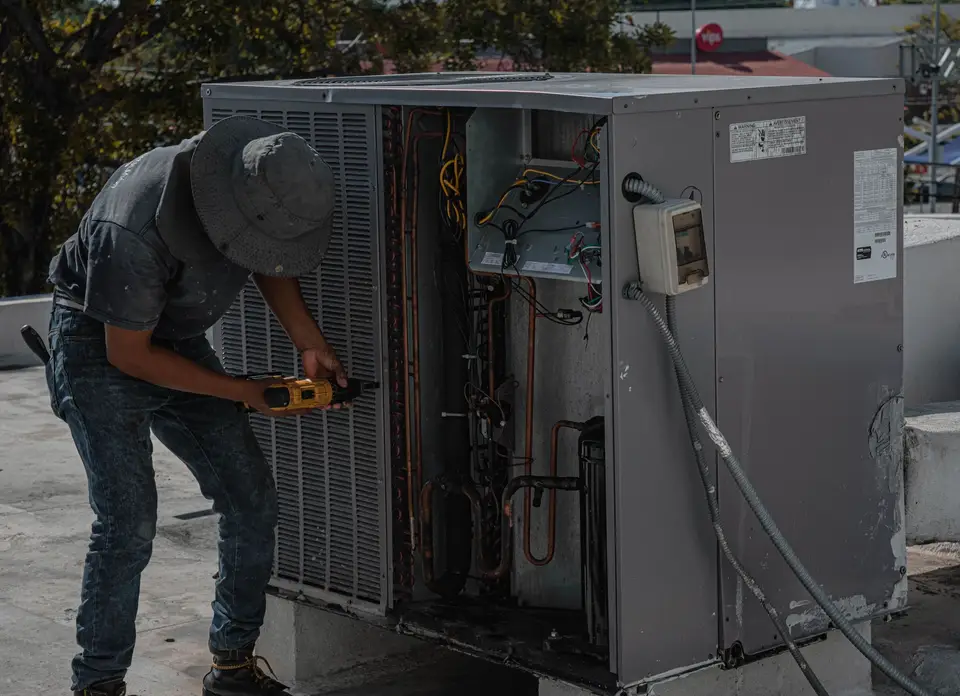
AC repair in Marietta follows the calendar. From late May into September the air conditioner in a Cobb County home may run most of the day, pulling moisture out of thick Georgia air as hard as it cools it. That load wears out the same short list of parts year after year, and most service calls end with one of them replaced and cold air coming out of the vents before the tech leaves.
The job is to find which part it is without guessing. A tech who swaps parts until the system starts is charging you for the guesses. A tech who takes readings first can show you the failed part and the number that proves it.
The faults behind most summer calls
Across Marietta, Kennesaw and Smyrna, the same handful of causes shows up again and again:
- Capacitors. The capacitor stores the kick that starts the compressor and the outdoor fan motor. Summer heat dries it out, and a weak one is the classic reason an outdoor unit hums but never starts, or starts and trips the breaker a few seconds later.
- Contactors. This relay in the outdoor unit closes when the thermostat calls for cooling. Over thousands of cycles its contacts pit and burn until they stop closing at all. The indoor fan runs, the house never cools.
- Clogged drain lines. The indoor coil pulls gallons of water out of the air on a humid day. When algae and dust block the drain line, that water fills the pan. In a house with the air handler in the attic, it ends up as a stain on the ceiling below.
- Failed float switches. The small safety switch that should shut the system off when the pan fills can stick or fail, which is why an attic leak sometimes happens with no warning at all.
- Dirty coils and filters. Pollen season in Cobb County coats outdoor coils yellow every spring, and a clogged filter starves the indoor coil of air. Either one makes the system run longer and cool less, and a starved indoor coil can freeze solid.
- Refrigerant leaks. Low refrigerant always means a leak. Adding more without finding it buys a few weeks, and then the call comes back.
What happens on the visit
The tech starts by asking what you have noticed and when it started. Then come the readings: the temperature of the air going into the system and coming out of the vents, the refrigerant pressures, the amp draw on the compressor and the fan, and the condition of the capacitor, the contactor and the wiring. On a system with the air handler in the attic, the tech also checks the drain pan, the float switch and the insulation on the lines.
You get the finding in plain words. “The capacitor is rated for 45 and testing at 31” means something you can check against the label yourself. If you want to see the part or the meter, ask.
Then the price goes on paper before any work starts. If the repair is small, that is usually the end of the conversation. If the system is old and the repair is large, the sheet also carries the price of a new system, sized for your house, so you can compare the two without a second appointment.
Most common parts ride on the van, including capacitors, contactors, fan motors, float switches and drain fittings. When a part has to be ordered, the tech tells you how long it will take before you agree, and gets the system running safely in the meantime if that can be done.
Two-story homes and attic systems
Many houses in Kennesaw and East Cobb were built in the 1990s and 2000s with two systems: one for the main floor with the furnace in a closet or the basement, and one for the upstairs with the furnace and coil in the attic. The attic unit lives in the harshest spot in the house. It is the one that floods the pan, the one whose ducts work loose and the one that struggles on the hottest afternoons.
When an upstairs will not cool, the cause is often not the equipment alone. A return that is too small, a crushed duct, a filter rack that lets air bypass the filter or an attic with too little insulation can all keep the bedrooms warm. The tech checks the system first, then the airflow, and tells you which of these is in play before suggesting any work.
When to call and when to wait
Call the same day if the outdoor unit is humming but not running, if you smell burning near the outdoor or indoor unit, if water is coming through a ceiling, or if the breaker trips again after you reset it once. Those are signs that something can get worse quickly.
It can usually wait for a weekday visit if the system cools but not as well as last year, if it runs much longer than it used to, or if the power bill jumped without an obvious reason. Those are worth fixing, but not worth an after-hours fee.
Before you call, check that the thermostat is set to cool and that its batteries are good, that the filter is not packed with dust and that the breaker for the outdoor unit has not tripped. A surprising number of calls end at one of those three, and checking them first can save you the visit fee.
After the repair
When the work is done, the tech runs the system through a full cooling cycle and measures the temperature at the vents again. You get a note of what was found, what was replaced and anything the tech saw that is worth watching, such as a coil that will need cleaning next spring or a capacitor on the second system that tested low.
If you would rather not keep track of any of that yourself, a maintenance plan books a spring check and a fall check for you every year. If the repair is bigger than the system is worth, the system replacement page explains how we size and quote a new one.
Where we work
- AC repair in Marietta, GAFrom the older brick homes near the Square to the newer neighborhoods out toward East Cobb, we repair, tune up and replace heating and cooling systems across Marietta.
- AC repair in Kennesaw, GATwo-story homes from the 1990s and 2000s with the furnace in the attic and a second system upstairs, many of them now reaching the age where parts start to fail.
- AC repair in Smyrna, GATownhomes, renovated ranches and new infill houses close to the city, where tight closets and crawlspace ducts shape every repair.
Guides
- Repair or Replace a Furnace or AC in Cobb County?Repair or replace a furnace, AC or heat pump in Cobb County? Age, repair size, safety, comfort and efficiency, weighed in plain words, with the questions to ask.
- Six Things to Check Before You Call for HVAC ServiceSix things to check before you call for HVAC service. Thermostat, filter, breakers, the furnace switch, the drain pan and the outdoor unit, explained step by step.
Questions about ac repair
How fast can someone come out when the AC quits?
Most days we can get a tech to you the same day or the next morning, and calls that come in early have the best odds. A house with a baby, an older person or a health condition goes to the top of the board. You hear the arrival window and the visit fee on the phone, and the weekend or evening fee too if one applies.
Should I keep running the AC if the lines are frozen?
No. Switch the system to off at the thermostat and leave the fan on to help the ice melt. Running a frozen system pushes liquid refrigerant back to the compressor, which is the most expensive part in the unit. Once it has thawed, book a visit so the tech can find out why it froze.
Is it worth fixing an air conditioner that is 14 years old?
Sometimes. A contactor, a capacitor or a cleared drain line is a modest bill on a system of any age. A compressor or an outdoor coil on a unit that age is a different story. The tech writes both prices on the same sheet and tells you plainly which one we would pick if it were our house.
Why is my upstairs so much hotter than downstairs?
Heat rises, and the upstairs of a two-story Cobb County house sits right under an attic that can pass 130 degrees in July. A single system for both floors, a weak return upstairs, leaky attic ducts or a dirty coil all make it worse. The tech measures the airflow on each floor before suggesting anything.